
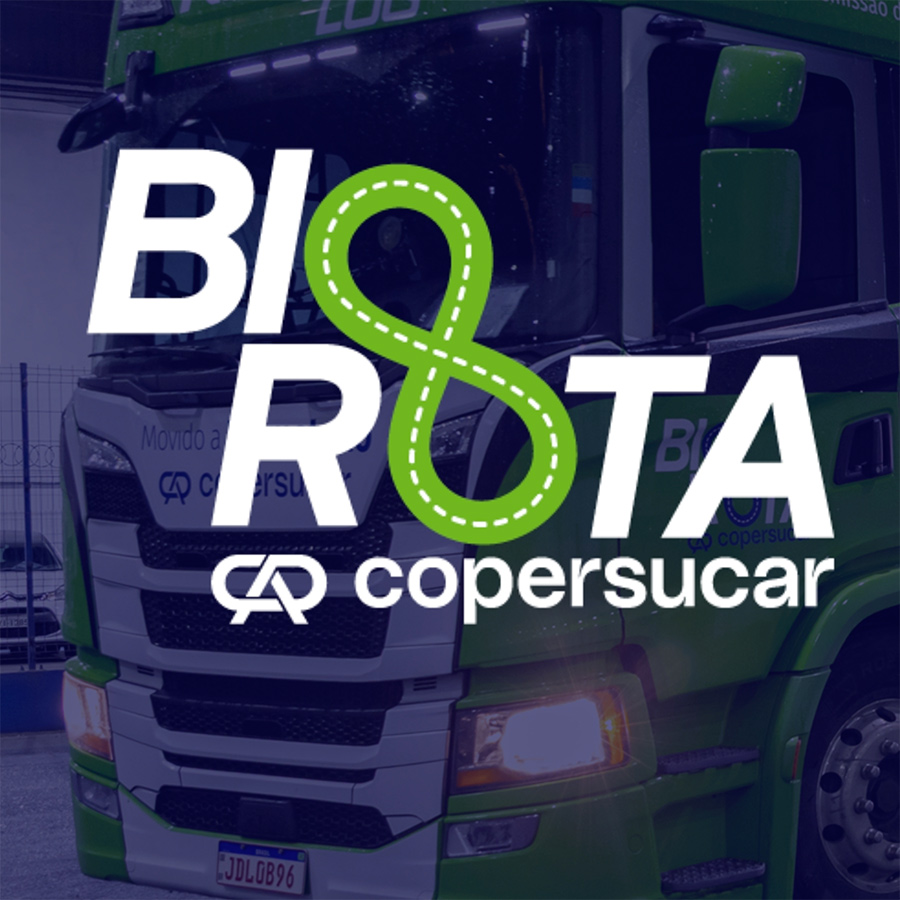
Copersucar presents BioRota, Brazil’s largest sustainable logistics operation powered by biomethane
Highlights:
- BioRota has more than 70 biomethane-powered trucks, which, on the routes already in operation, transport sugar from associated mills to the Port of Santos.
- The trucks currently use biomethane produced at Cocal’s units. Cocal is a pioneer in biomethane production in the sugar-energy sector and already operates two large-scale plants in the western São Paulo using organic residues from sugarcane.
- Biomethane reduces greenhouse gas emissions by up to 90% compared to diesel.
- Biomethane also offers economic advantages over fossil fuels, in addition to its environmental benefits.
- BioRota has already replaced approximately 5 million liters of diesel and avoided the emission of more than 8,000 tons of CO₂.
- The solution shows that it is scalable and can be adopted by companies across different sectors with road logistics operations.
São Paulo, May 13, 2026 – As part of its commitment to promoting large-scale solutions that drive the energy transition, Copersucar introduces BioRota to the market, Brazil’s largest sustainable logistics operation powered by biomethane. Created in April 2024 to transport the products traded by Copersucar, BioRota replaces diesel with biomethane produced from sugarcane residues, in an example of circular economy, in which residues are reused as feedstock for new processes – in this case, energy production.
In addition to reducing greenhouse gas emissions by 90% compared to diesel, biomethane also stands out for its economic competitiveness over fossil fuels. “BioRota shows, in practice, how Copersucar transforms sustainability into operational gains and competitiveness. It is a scalable and economically viable solution that accelerates the decarbonization of heavy transport and reinforces Brazil’s role in the global energy transition,” says Tomás Manzano, CEO of Copersucar.
A pioneering operation in Brazil, BioRota presents figures that demonstrate its expansion potential. Between April 2024 and March 2026, Copersucar completed more than 13,000 trips, covering 11 million km (around 6.8 million miles), equivalent to circling the Earth 280 times; and transported approximately 600,000 tons of sugar to the Port of Santos, a volume equivalent to the annual consumption of more than 27 million people.
During this period, the initiative avoided the emission of more than 8,000 tons of CO₂ by replacing approximately 5 million liters of diesel with biomethane — equivalent to the carbon captured by 380,000 trees in one year.
BioRota began through a partnership between Copersucar and Raiter, a transport company and pioneer in gas-powered trucks fleets. Today, the operation already includes four additional carriers, which refuel with biomethane at Cocal’s two production units. The plant located in Narandiba, São Paulo, has a production capacity of up to 25,000 m3/day of biomethane, while the plant in Paraguaçu Paulista, São Paulo, has a production capacity of up to 60,000 m3/day of the renewable gas during the harvest season. Copersucar expects that, in the coming years, all associated mills will begin producing and using biomethane in their operations.
Initiatives such as BioRota already demonstrate significant scale, but there is still considerable potential for expansion, driven by a technology that is ready for adoption. Biomethane is an economically viable alternative to diesel, reinforcing its attractiveness and consolidating its strategic role in heavy transport’s energy mix, a hard-to-decarbonize sector.
“We tested the solution in our own operation and, based on the results achieved, we began offering the market our biomethane and specialized advisory services for its application in freight transport, contributing not only to fleet decarbonization but also to cost reduction. In other words, biomethane enables decarbonization while generating savings,” adds Manzano.
Biomethane
Brazil is at a decisive moment to accelerate the decarbonization of its energy mix, with biomethane emerging as a strategic solution to replace diesel and fossil natural gas in heavy transport and industry. A study conducted by Copersucar indicates that national biomethane production is expected to more than triple by 2027, from the current 656,000 m³/day to 2.3 million m³/day.
Today, Brazil consumes approximately 62 billion liters of diesel per year, more than 20% of which is imported. According to the study, if the country develops just 20% of its biomethane production potential and directs this volume toward replacing diesel over the next ten years, it will be possible to cut import needs by half, reducing external vulnerabilities and strengthening national energy security.
“We have all the ingredients needed to turn biomethane into an engine of Brazil’s energy transition: technological base, abundant raw material, logistics infrastructure, and an adequate regulatory framework,” concludes Manzano.
About Copersucar: Copersucar provides large-scale renewable energy solutions that contribute to the energy transition and global food security. Organized as a unique and integrated ecosystem of specialized businesses, the company is a global leader in the trading of sugar and ethanol and operates an efficient multimodal logistics system. In ethanol, it serves the Brazilian market through Evolua Etanol and the North American market through Eco-Energy, which also operates in natural gas trading. In sugar, in addition to the domestic market, the company serves customers in more than 70 countries throughout Alvean. Copersucar also operates in the renewable electricity sector through Newcom and is a shareholder in Logum, the largest ethanol pipeline transportation system in Brazil, and in CTC (Sugarcane Technology Center, its Portuguese acronym), the world’s largest sugarcane R&D center. To learn more, visit: www.copersucar.com.br
Media Contacts:
Nectar Comunicação – copersucar@nectarc.com.br
Taís Haupt +55 (11) 98978-0767