It's in our nature to care for the planet and people
A commitment to making a positive impact is embedded in everything we do, from the very beginning
The knowledge gained by the legitimate Brazilian producer spreads throughout our entire ecosystem, helping to build a culture of sustainable business ready to contribute to a low-carbon economy and the growth of society as a whole.
Sustainable from the origin
Decarbonization
in industrial operations has replaced the consumption of 6 MM liters of diesel
avoiding
Social impact
and food
security
indirect
jobs generated
by the ecosystem
our ecosystem
Sustainability Credits
Reduction Certificate)
sold in the United States
resulted in the mitigation of
to removing ~3,000 cargo trucks
traveling 100,000 kilometers a year
from roads
Data from the 25/26 Crop Year
Strengthening
local communities
Our Private Social Investment Policy prioritizes projects focusing on community education in the regions in which our ecosystem is present.
In the 25/26 Crop Year, we have reorganized our strategic pillars in areas such as education, sports, culture, health, and scientific development within the sugar-energy sector.

supported
social
projects

directly and
indirectly
impacted

invested

impacted
by social
projects
DONME - De Olho no Material Escolar
Copersucar and its associated mills have started, in partnership with the non-profit institution De Olho no Material Escolar, a project intended to teach professors and students of the public system about agribusiness and the sugar and energy sector. This initiative seeks to increase knowledge on environmental, social, economic, and technological aspects related to sugar and bioethanol production, by means of an approach based on scientific principles, practical experience, and learning results.
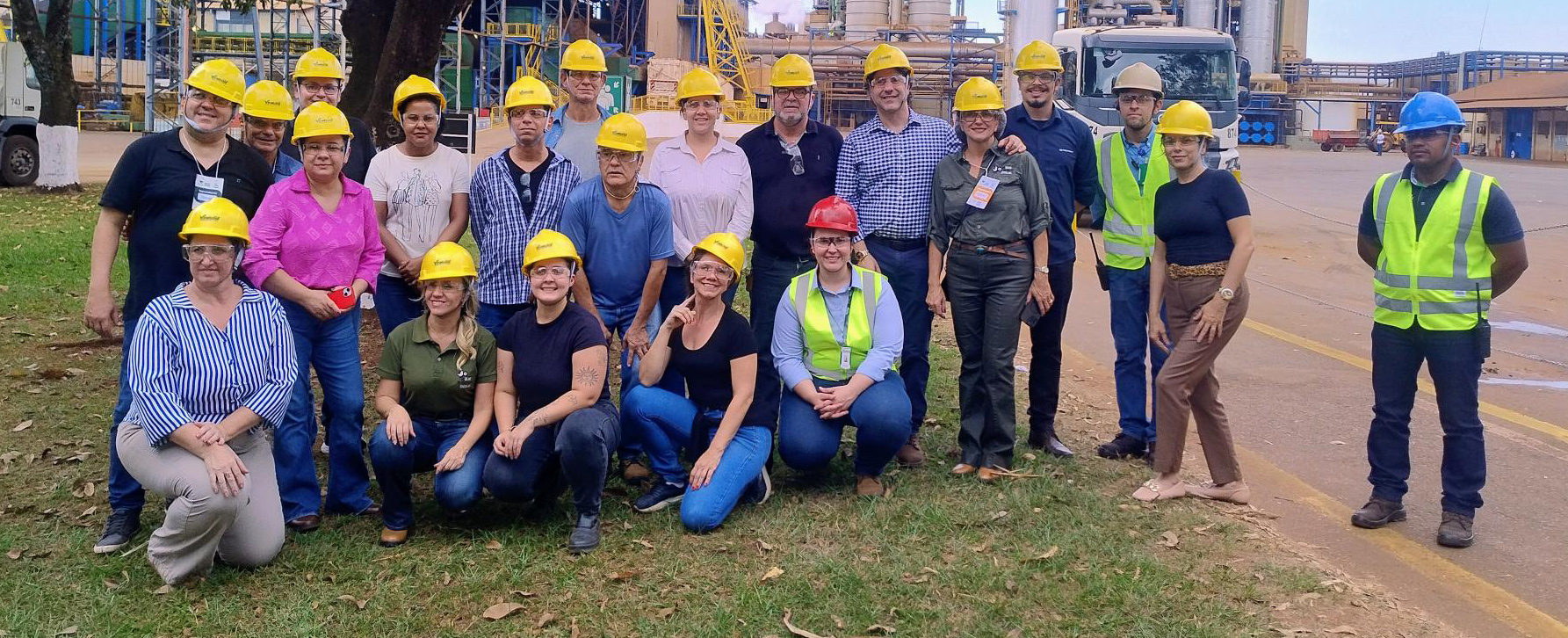
This project starts with the "Masters in Agriculture", a stage focusing on teaching teachers and offering support for content preparation. Afterwards, students participate in "Living and Practicing", with visits to mills of the Copersucar Ecosystem to learn up close about their operations. In the end, students do classroom projects to ensure this content is assimilated.
Among the discussed topics are the economic relevance of the sugar and energy sector, good sustainability practices in the field, innovation and new sugarcane by-products, such as biomethane and biomass energy.
The DONME and Copersucar partnership will benefit
students from High School
and Technical Courses
cities from São Paulo, Paraná and Goiás directly benefited
Copersucar Ecosystem Certifications

RenovaBio
37 certified millsCreated in 2017 to encourage the replacement of fossil sources with renewable fuels.

METI Japão
16 certified millsSets forth incentive laws to expand renewable energies, including the increase in bioethanol consumption.

Bonsucro
13 certified millsVoluntary international certification model specific for the sugarcane chain.

FSSC 22000
12 certified millsFood safety management scheme with additional specifications.

ISO 22000
12 certified millsFood safety management system.
SMETA
11 certified millsInternational audit focusing on assessing sustainability standards.

EPA RFS2
7 certified millsRequirement to export bioethanol to the American market, required by the Environmental Protection Agency (EPA).
ISCC CORSIA
6 certified millsVoluntary international certification program for sustainable aviation fuels (SAF).
LCFS
4 certified millsRequirement to export bioethanol to the Californian market, required by the California Air Resources Board (CARB).

Halal
4 certified millsCertification that ensures that all processes and products are in accordance with Islamic Law.
ISO 9001
4 certified millsAn international standard that defines the requirements for a Quality Management System (QMS).
ISCC PLUS
2 certified millsGlobal certification focused on sustainability and traceability of bio-based, circular and renewable raw materials.

ISCC EU
2 certified millsInternational sustainability and traceability certification for biofuels and biomass, ensuring compliance with European Union requirements and the criteria of the Renewable Energy Directive (RED), including applications related to maritime transport.
Kosher
1 certified millCertification that attests conformity with Jewish food laws.
Governance
Copersucar adopts sustainable practices, tracking environmental, social, and economic impacts with guidance from the Board of Directors and the Sustainability Committee. Since 2009/2010, it has published reports aligned with the Global Reporting Initiative (GRI), audited by an independent company to ensure transparency.
The company runs an ethics channel, managed by a specialized organization, which receives reports anonymously of potential misconduct, ensuring confidentiality, impartiality, and proper investigation.
See all our
Sustainability
Report editions
Our Sustainability Reports provide details on how the Copersucar Ecosystem contributes to food security and the decarbonization of the energy sector. All data is approved by the company’s governance and externally assured.